Information on Wildfire and Smoke Air Quality Concerns
Wildland fire smoke presents a major hazard to workers and the public. Right now, parts of the United States and Canada have extremely high levels of ozone and particulate matter in the air due to the ongoing wildland fires. The continued excessive heat only makes the situation more hazardous for workers. This is not just a hazard for people outdoors, wildland fire smoke exposure can happen indoors, too, through open doors and windows and through HVAC systems which cannot filter this number of particles.
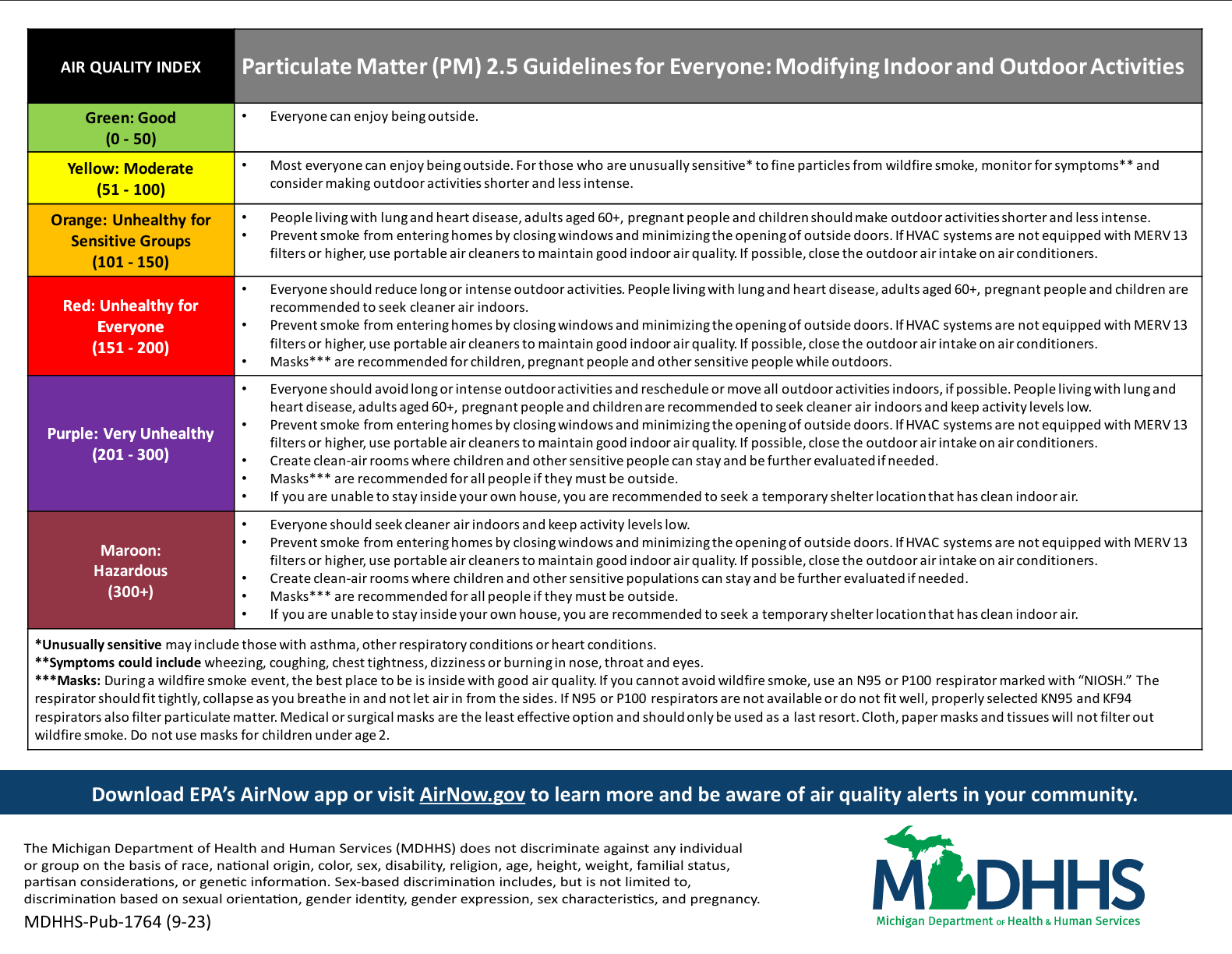
The U.S. Environmental Protection Agency (EPA) Air Quality Index (AQI) is a range of air quality from “Good” to “Hazardous” based on levels of particulates in the air. Each level carries greater risks for workers and members of the public, especially those who are older or have underlying health conditions. The Michigan Department of Health and Human services has a helpful chart displaying the EPA Air quality and guidelines for each level:
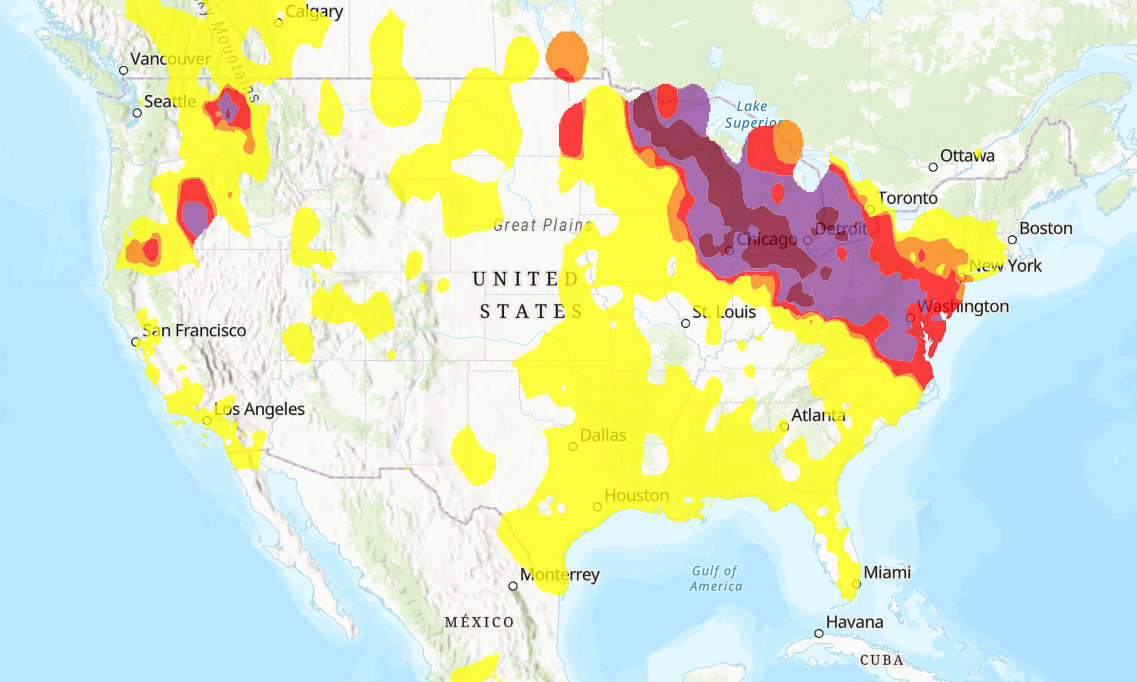
The EPA runs the AirNow Fire and Smoke Map, in partnership with the U.S. Forest Service, which provides information that you can use to help protect your health from wildland fire smoke. As of 12 pm Eastern today, this is what the map looked like:
Symptoms and health effects from exposure to wildland fire smoke can vary. Some workers may be at higher risk from wildland fire smoke because of their age or health conditions, such as heart or lung disease. Working long hours or doing physically demanding jobs can also increase risk because heavier breathing causes more smoke to be inhaled. According to the National Institute for Occupational Safety and Health (NIOSH), exposure to wildland fire smoke can lead to several health effects, including:
• Symptoms such as eye irritation, sore throat, wheeze, and cough,
• Asthma and chronic obstructive pulmonary disease (COPD) exacerbations,
• Bronchitis and pneumonia,
• Adverse birth outcomes, and
• Cardiovascular (heart and blood vessel) outcomes
NIOSH also provides information to help employers and workers to take steps to limit exposure to wildland fire smoke. If work must be done in smoky conditions, especially for long periods, or if a worker is sensitive to smoke and experiences health effects, the following measures can help reduce smoke exposure:
• Frequently monitor air quality conditions in the area by visiting the Environmental
Protection Agency (EPA) US Fire and Smoke Map or the state health department’s air
quality website
• Relocate or reschedule work tasks to smoke-free or less smoky areas or times of the day
• Reduce levels of physical activity, especially strenuous and heavy work
• Require and encourage workers to take frequent breaks in places that are free from
smoke
• Limit the worker’s smoke exposure by making accommodations for that worker to
perform their duties indoors or in a location that reduces exposure to smoke
The most protective option when air is unhealthy is to stay indoors. To reduce exposure to
wildland fire smoke while working indoors, employers or building managers can:
• Ensure that windows and other building openings such as loading docks are kept closed
to reduce overall smoke exposure inside
• Operate heating, ventilation, and air conditioning (HVAC) systems in the re-circulate
setting or temporarily reduce the amount of outdoor air supplied to the building
• Install the highest efficiency filters recommended by the designer or manufacturer of
the HVAC system.
• Install air cleaners equipped with high-efficiency particulate air (HEPA) filter or
electrostatic precipitators. Do NOT use ozone or ion generating devices. These can
make air quality worse, especially for people with underlying health conditions.
If workers must be outside, respirators may be one of the easiest, and in some cases the only control to implement for limiting a worker’s exposure to the particulate matter in wildland fire smoke. Employers may need to consider alternative controls and solutions when respirators are not easily available.
If an employer requires their employees to use respiratory protection to limit smoke exposure, they must always do it as part of a comprehensive respiratory protection program as required under the Occupational Safety and Health Administration’s (OSHA) Respiratory Protection standard (29 CFR 1910.134). When respirators are used on a voluntary basis in an occupational setting, employers should follow the OSHA requirements for the voluntary use of respirators.
Things to remember about respirators and other masks:
• Filtering facepiece respirators (like N95 or P100 respirators) only protect against
exposures to particles like the particulate matter in wildland fire smoke. They do not
protect against gases or other non-particle exposures.
• Tight-fitting respirators cannot be used by people with facial hair that interferes with
the face seal.
• Wearing a respirator or mask, especially if it is hot or you are physically active, can
increase the risk of heat-related illness. Take breaks often and drink water.




 UAW
UAW