Tag Archive for: WASHINGTON D.C.

UAW Vice President Rich Boyer and Region 4 Director Brandon Campbell with region members lobbying on Capitol Hill on Day 3 of the 2026 National CAP Conference in Washington, D.C., on February 10, 2026.

UAW members took the union’s working-class agenda to Capitol Hill on Tuesday, lobbying political leaders to support legislation advancing the union’s four core issues.

Delegates from each of the UAW’s nine regions met with their respective elected representatives to share their personal stories and to push for pro-worker policies, including affordable healthcare, protecting and expanding worker rights to freely organize, shorter work weeks and improved paid leave, and real retirement security for every American.

On Tuesday evening, UAW Secretary-Treasurer Margaret Mock welcomed attendees to the Congressional & Movement Allies Reception, reminding UAW members that it’s on all of us to fight for a better tomorrow.

“If there’s one thing that’s been made absolutely clear over the last forty years, it’s that billionaires and corporations will never use their influence and power over our government to make life better for everyday Americans,” Mock told attendees. “Only WE can do that. It is our time to lead and to stand up to the oppressive forces we are seeing today… to give people inspiration, hope, and the belief that, if we stand together and fight, we can ensure our country works for working people.”

The final day of the 2026 National CAP Conference will convene at 9 am tomorrow and will feature U.S. Senator Rev. Raphael Warnock (GA), a Michigan Senate Forum at 10 am, followed by U.S. Senator Bernie Sanders (VT). All three events will be livestreamed on UAW YouTube, X, and Facebook.

Recap of Day One of the National CAP Conference
Recap of Day Two of the National CAP Conference

For more information on this year’s event, visit UAW.org/CAP2026.


The UAW kicked off its biannual Community Action Program (CAP) Conference in Washington, D.C., on Sunday, bringing together nearly 1,000 union members from across the country to strategize and build power for the working class. This year’s conference agenda focuses on the UAW’s political vision and four core priorities: wages, health care, retirement, and time off.

UAW Region 8 Director Tim Smith opened proceedings by welcoming delegates to the region and introducing the International Executive Board. In his typical fashion, Director Smith fired up the crowd with his passion and energy: “Workers everywhere are waking up and realizing they need a union, but not just any union. They want the UAW, the mighty UAW!”

Newly elected Region 9 Director Jimmy Lakeman recalled iconic UAW President Walter Reuther’s belief that “there’s a direct relationship between the ballot box and the bread box, and what the union fights for and wins at the bargaining table can be taken away in the legislative halls.”

“Elections matter,” Lakeman told delegates. “And the people we elect and what they fight for matter.”

Guest speakers for the day included Independent candidate for U.S. Senate in Nebraska, Dan Osborn, and AFGE President Everett Kelley.

Osborn, recently endorsed by the UAW, emphasized the need for the working class to reject division and instead to unite around its shared interests to take on the billionaire class and a broken economic system: “We need to stop looking left and right and start looking up,” Osborn said.

AFGE President Everett Kelley delivered an impassioned speech, calling out the Trump administration’s attacks on worker rights and urging UAW members to get involved in the political process: “We’re gonna mobilize and organize, not as spectators, not as commentators, but as participators! We’re gonna make it clear that attacks on labor come at a political cost!”

The conclusion of Day One proceedings was followed by dinner and a Super Bowl LX watch party where members cheered on (or rooted against) the Seahawks and Patriots.

Day Two of the 2026 National CAP Conference will convene at 9 am tomorrow.

For more information on this year’s event, visit UAW.org/CAP2026.


The UAW will hold its biannual Community Action Program (CAP) Conference in Washington, D.C., from February 8–11, bringing together nearly 1,000 union members from across the country to strategize and build power for the working class.

The conference agenda will focus on the UAW’s political vision and four core priorities: wages, health care, retirement, and time off. Participants will also address the growing threats to the American Dream posed by corporate greed and divide-and-conquer politics.

On Monday, February 9, UAW President Shawn Fain will deliver a keynote address outlining the union’s political vision for taking on the billionaire class.

On Wednesday, Feb. 11, the union will hold its first candidate forum of 2026, featuring leading candidates who are running for Michigan’s U.S. Senate. The forum will be livestreamed on UAW social channels.

WHO:  The UAW’s National Community Action Program (CAP)

WHAT:  “Building Working Class Power: Our Time to Lead” – the Union’s Biannual CAP Conference

WHERE:  Washington Hilton, 1919 Connecticut Ave. NW, Washington, DC 20009

WHEN:  February 8-11; MI Senate Forum during February 11’s morning plenary

The Michigan U.S. Senate candidate forum will take place during the final morning plenary starting at 9:45 am on Wednesday, Feb. 11. The candidate forum will also be Livestreamed on UAW digital channels, including YouTube and Facebook. For more information on the UAW’s CAP Conference, including the agenda, visit UAW.org/CAP2026.

Members of the press are invited to attend the Monday and Wednesday sessions. RSVP is required.

Photo by Sarah Joseph

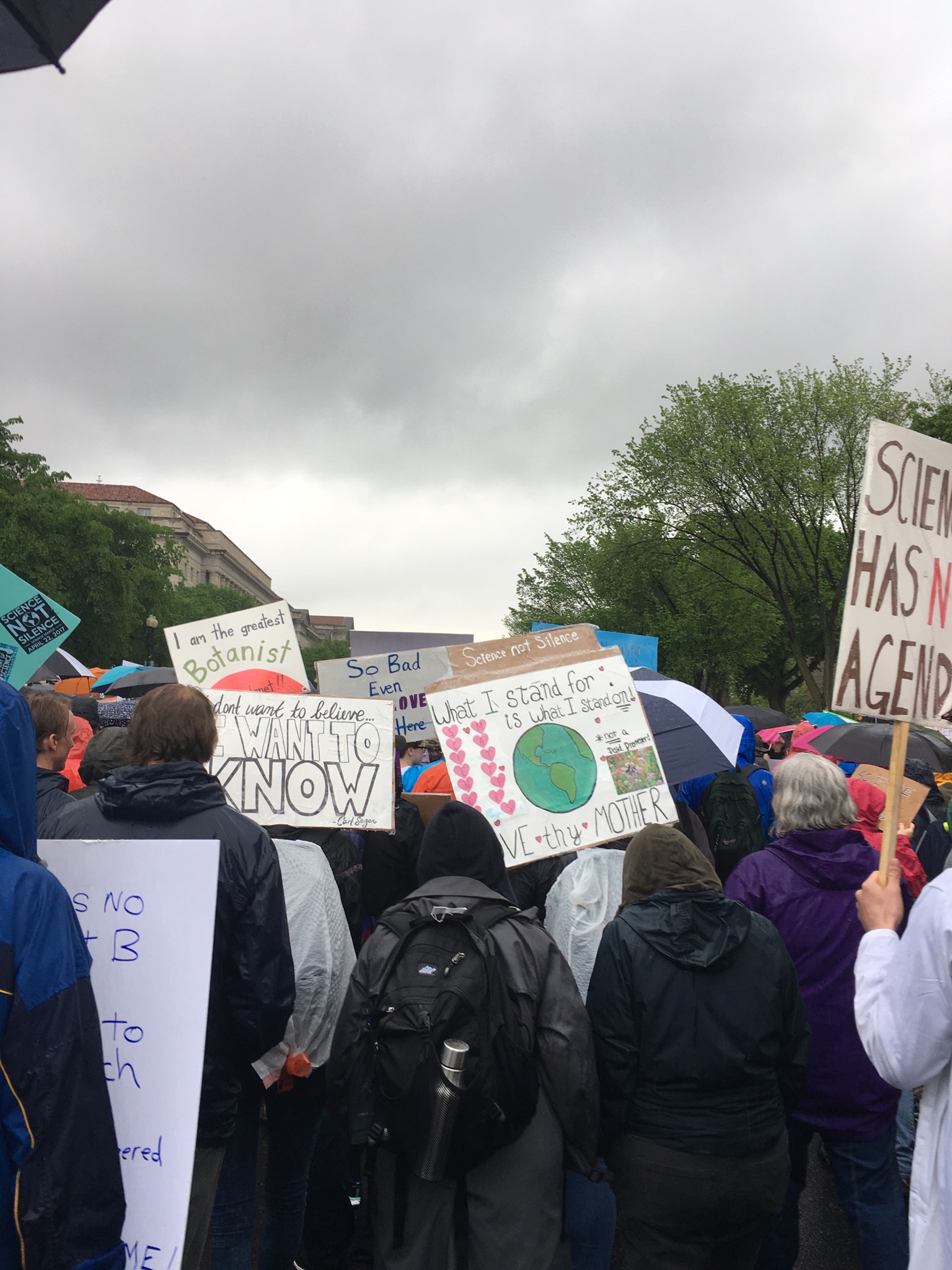
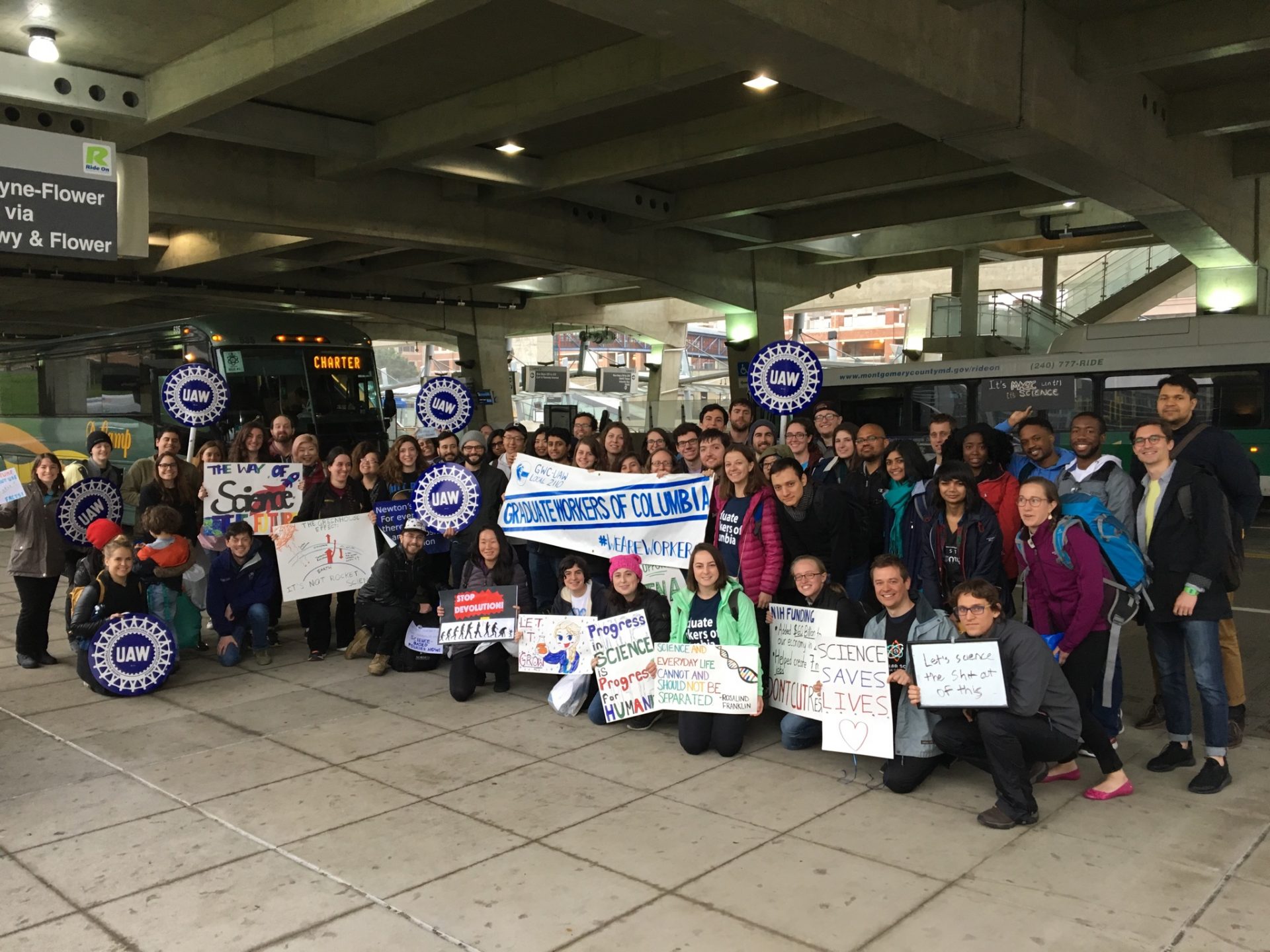
On Saturday, Earth Day, tens of thousands of people participated in the March for Science at the National Mall in Washington, D.C., and numerous other cities across the U.S.  Among the participants in Washington were hundreds of UAW members who rallied behind the mission of the event and spent the day celebrating science.

Local 2110 at the March for Science
Photo by Catherine Braine

The passionate crowd gathered to generate a conversation about the alarming trend toward discrediting facts and scientific consensus, and restricting scientific discovery.

Sarah Joseph, a UAW Local 2110 member from the Department of Genetics at Columbia University, had a very personal reason for participating in the March for Science.  “I march because without science I would not have been born.  I was conceived through IVF (in vitro fertilization), and I march because without science many of my family members would not be alive today.

“I am participating to raise awareness for science and to dispel the misconception that there is such a thing as ‘your’ facts.  Facts are facts.  It is the interpretation of facts that is up for debate,” said Joseph.

The March for Science champions and defends science and scientific integrity, but it is a small step in the process toward encouraging the application of science in policy.  March for Science organizers and participants say the best way to ensure science will influence policy is to encourage people to appreciate and engage with science. That can only happen through education, communication and ties of mutual respect between scientists and their communities — the paths of communication must go both ways. There has too long been a divide between the scientific community, the public and the politicians who represent them.

Local 2110 poses at March for Science
  Photo by Catherine Braine

“I’m marching because I think it’s immoral for politicians to deny the basic fact of climate change when they have the chance to change that,” said Catherine Braine, a UAW Local 2110 member from the Department of Neurobiology and Behavior at Columbia University.

“I am also a graduate student whose research is funded by NIH (National Institutes of Health), the organization the Trump budget wants to cut by 20 percent,” Braine added.  “It’s important for everyone to be involved because everyone should push for policies that acknowledge objective reality and seek to be responsible guardians of the Earth.”

As debates continue in Washington over funding of science, Saturday’s event sent a very clear message to politicians: Back up your reasons for doubting scientific evidence and, more important, back off science funding!