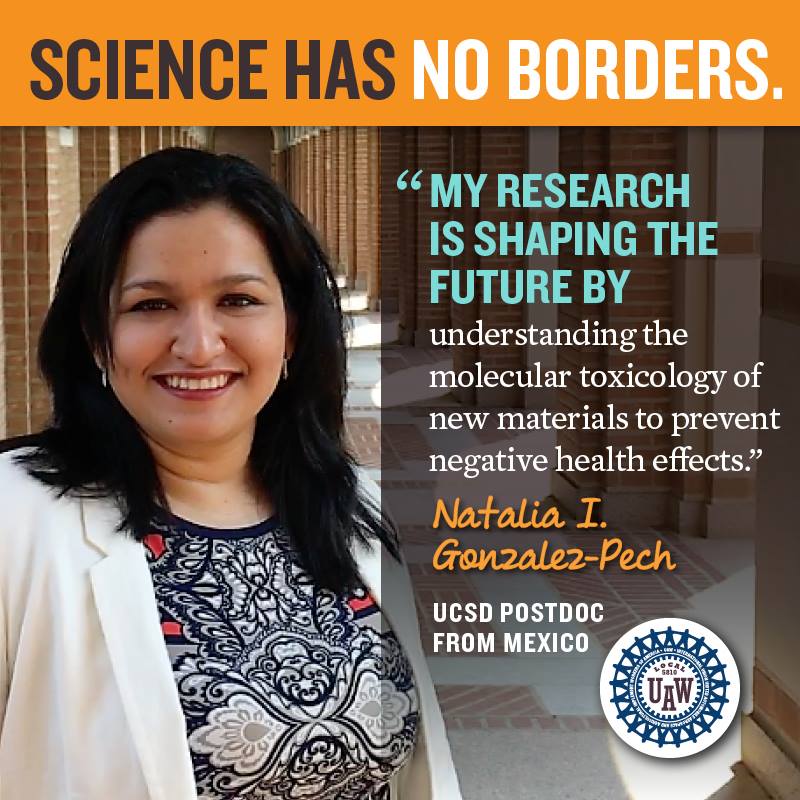
International workers have always faced challenges and precarity on account of their status as visa holders. This is especially true under the current presidential administration. This precarity can cause stress, concern, and uncertainty for international student workers.
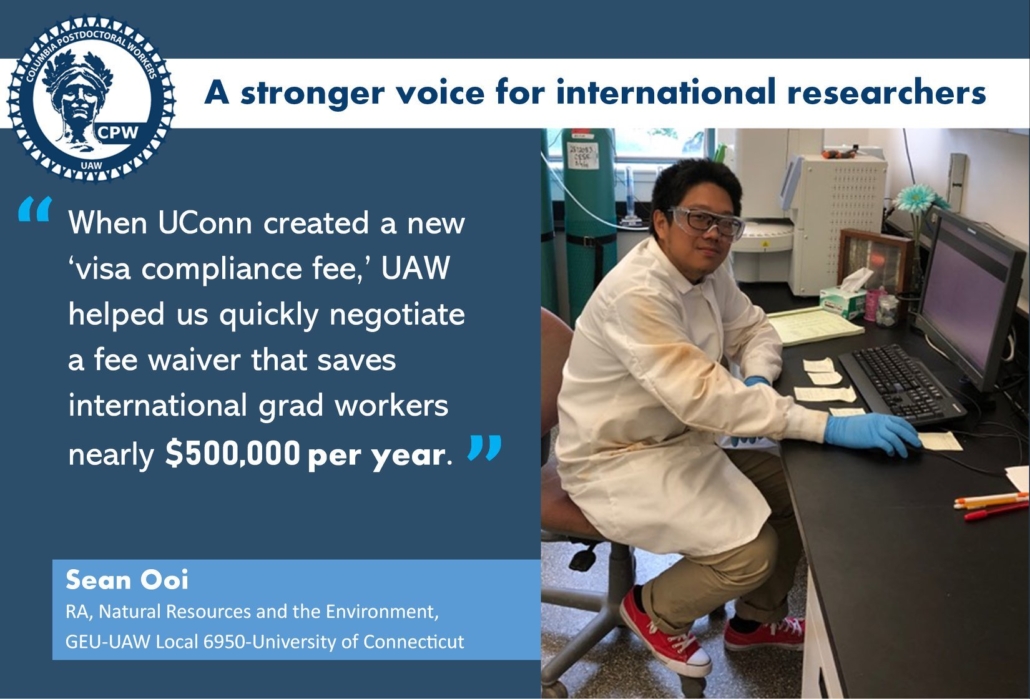
International academic workers have gained increased security and support by unionizing and negotiating for additional protections. Some examples of gains made by international academic workers at other universities include:
- UW grad workers, postdocs, and researchers (UAW 4121) won rights for international workers including visa fee reimbursement, paid leave for immigration appointments and hearings plus the right to reappointment if a worker loses work authorization.
- Harvard student workers (UAW 5118) established a $100,000 annual fund for international student workers to use toward costs associated with immigration and maintenance of legal working status in the United States.
- University of California Postdocs (UAW 5810) won increased rights for international postdocs by ending UC’s practice of denying health benefits for many international postdocs and ensuring equal treatment regardless of immigration status.Organized and won new protections including a legal support fund at the University of California.
- Mt. Sinai and Weill Cornell Postdocs in New York won guaranteed visa renewal leave for immigration-related proceedings and the right to timely tax assistance and up to $1250 in reimbursements for visa-related expenses.
- Columbia student workers bargained for and won rights for international student workers, including paid leave for immigration appointments, arrangements for remote work if one cannot return to the US for reasons outside their control, and guaranteed support from immigration attorneys for visa issues.
On a broader scale, UAW has also been a critical resource and provided a political voice for international students and scholars to affect national policy. UAW academic workers have:
- Created resources for international scholar members including a free hotline staffed by immigration attorneys, FAQs and know-your-rights webinars.
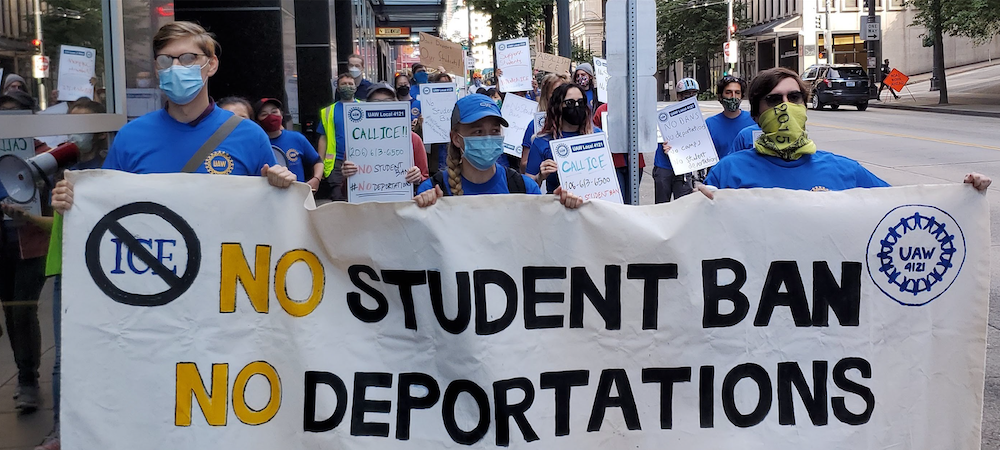
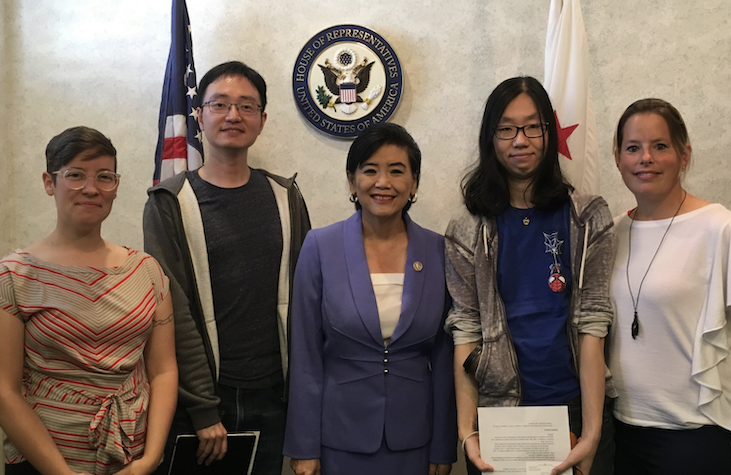
- During the first Trump administration, in October of 2020, UAW academic workers mobilized against a proposed rule by ICE to shorten visa stays for international scholars; thousands of public comments were submitted, including by the President of the UAW International. In July of 2020, thanks to the direct action by UAW academic workers across the country, in addition to efforts by our university and government allies, ICE backed down from its directive to deport international students taking online classes due to COVID-19. In 2017, the UAW International filed an amicus brief in the Supreme Court case challenging the Trump administration’s travel ban. UAW Locals 5810, 2865 and 4121 also worked with Congressional Representatives Judy Chu (San Gabriel Valley, California) and Pramila Jayapal (Seattle) on a Dear Colleague letter demanding that Secretary of State Pompeo restore the validity period of Chinese international students’ entry visas from 12 months back to 60 months.
- Supported litigation against the Trump administration’s policy of arresting and deporting workers for protected speech (AAUP vs. Rubio).
- Filed an amicus brief in support of litigation (Svitlana Doe v. Noem) challenging the Trump administration’s end of the TCHNV parole program that allows certain immigrants from Cuba, Haiti, Nicaragua, and Venezuela to be lawfully in the United States with a right to work.
- The UAW joined AAUP and others as plaintiffs in a federal lawsuit challenging the Trump administration’s “$1 million Gold Card” visa program. The lawsuit argues that the administration is unlawfully selling priority access to green cards to the wealthy rather than based on merit.
- Working with members of Congress, UAW academic workers helped win the Optional Practical Training STEM extension.